Chasing Light in Zion National Park
There are certain places in the American Southwest that feel almost too grand to fully take in, and Observation Point in Zion National Park is one of them. Perched high above the canyon floor, it offers a perspective that makes even the most iconic viewpoints feel small. I had seen photos, read the guides, and knew it was a must-do hike, but I wasn’t there just for the view.
I came with a very specific goal in mind: to watch the canyon transform not just at sunset, but long after the crowds had gone, when the moon would rise and begin to illuminate Zion from above.
Most people hike to Observation Point for golden hour and head back down before dark. But I couldn’t shake the idea of what Zion might look like under moonlight. Would the canyon glow? Would the shadows deepen? Would it even be visible?
So I packed my gear, timed the hike carefully, and committed to staying longer than most. What I didn’t realize at the time was just how surreal and unforgettable that decision would turn out to be.
Why Observation Point Gives the Best View in Zion
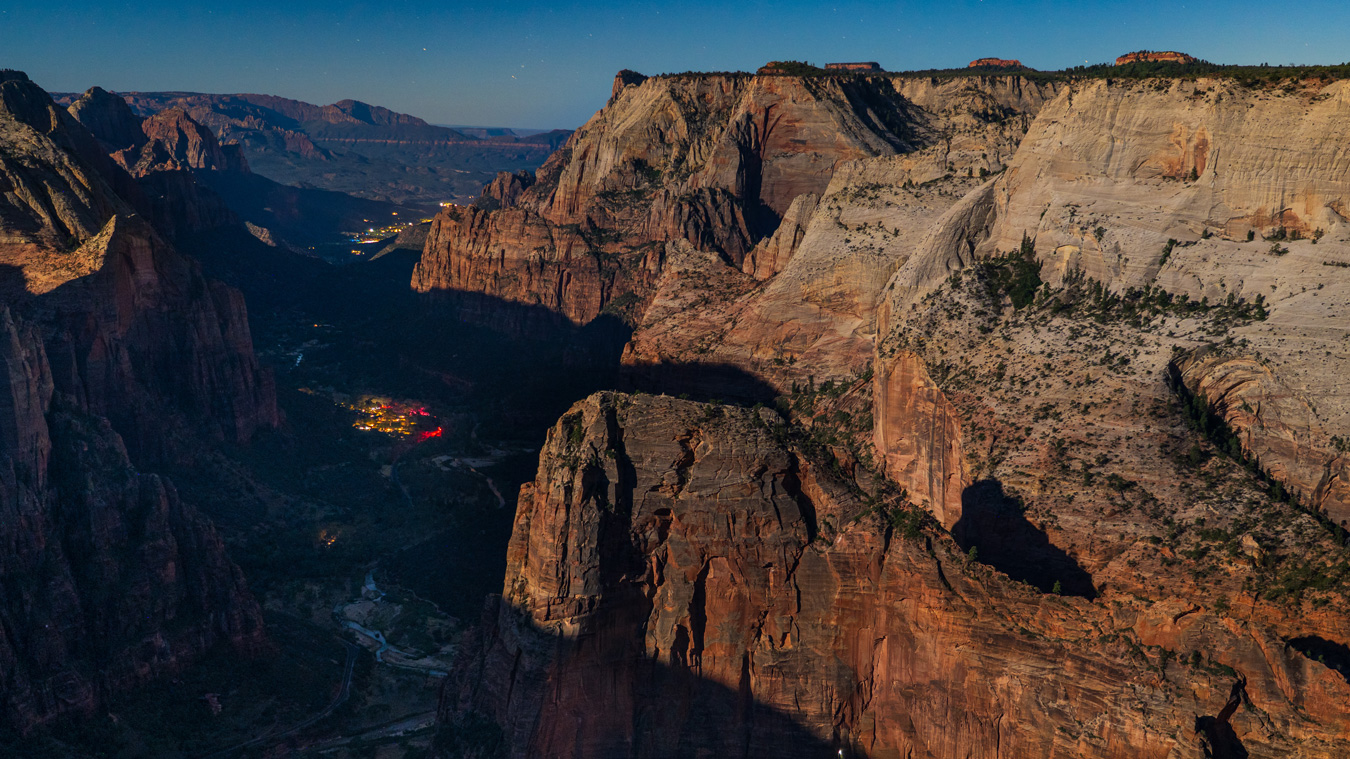
There’s no shortage of incredible viewpoints in Zion, but Observation Point stands in a category of its own. Sitting significantly higher than Angels Landing, it gives you a true top-down perspective of Zion Canyon rather than looking across it.
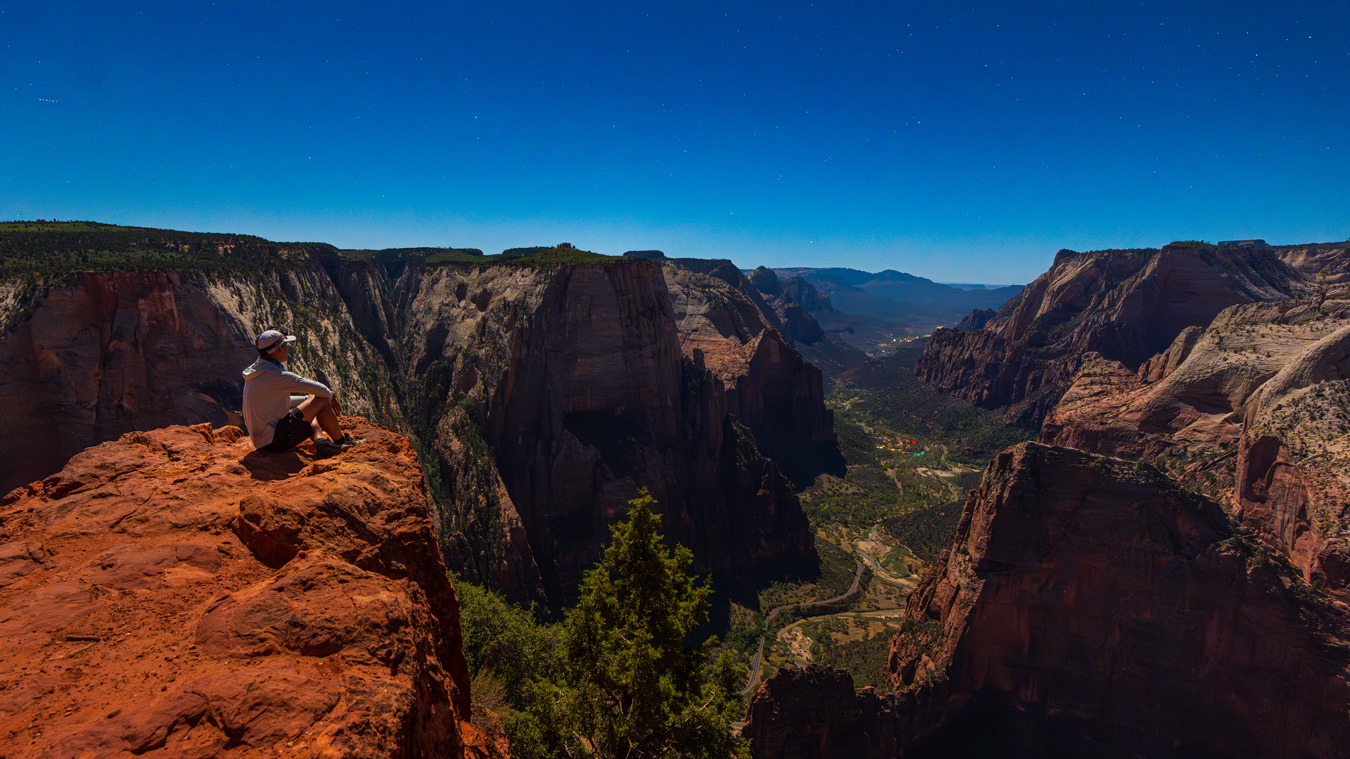
From the summit, the Virgin River winds through the canyon floor far below, carving its way between towering sandstone walls that glow deep red and orange in the right light. You can see nearly the entire main canyon from this vantage point, something very few locations in the park offer.
What makes it even more special is that, depending on your route, it often feels far less crowded than other iconic viewpoints. That sense of space, of having one of the most breathtaking views in the country almost to yourself adds something intangible to the experience.
How to Get to Observation Point via East Mesa Trail in Zion National Park
The most accessible way to reach Observation Point in Zion National Park is via the East Mesa Trail, which offers a gradual and relatively straightforward hike compared to the original route from the canyon floor.
To reach the trailhead, drive toward Zion Ponderosa Ranch Resort on a paved and clearly marked road along the northeast side of the park. After passing the resort, continue for about three miles on a dirt road. Along the way, you will see signs directing you toward Observation Point. From Zion Ponderosa, the drive typically takes about ten minutes.
Road conditions can vary significantly depending on weather. After rain, the dirt road can become muddy and difficult to navigate without a high clearance vehicle. In winter, ice and snow can make the route inaccessible without four wheel drive. If conditions are poor, you may need to park earlier and walk the remaining distance or arrange transportation through Zion Ponderosa or outfitters based in Springdale.
For me, choosing this route came down to timing. Since I planned to stay well past sunset, I needed an approach that would be manageable not only on the way up, but also for the hike back in complete darkness.
Hiking the East Mesa Trail to Observation Point
Trail Stats – East Mesa Trail to Observation Point
Distance: ~7 miles round trip
Elevation Gain: ~700 feet
Difficulty: Easy to moderate
Trail Type: Out and back
Estimated Time: 2.5 to 4 hours
The hike itself felt almost meditative. Compared to the energy and congestion of the main canyon, this route was quiet, almost unexpectedly so. There is a calm rhythm to the trail that lets you settle into your steps and simply move forward without distraction.
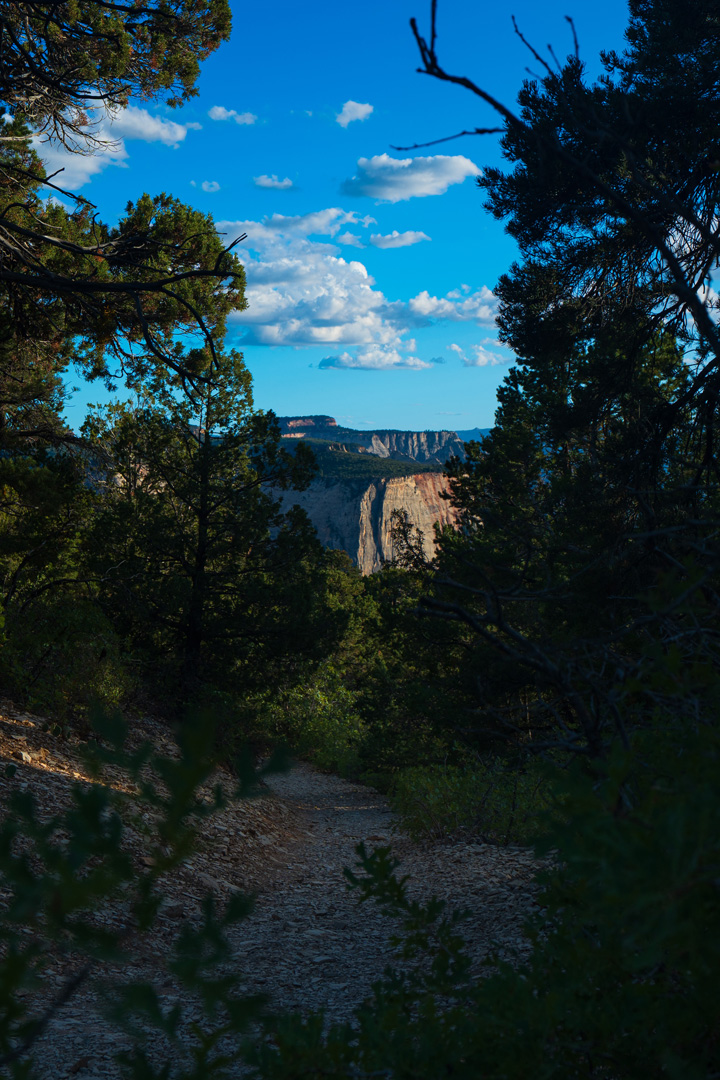
I will admit that the first half of the hike is not especially scenic. Much of the trail winds through open forest and flat terrain, without the dramatic views that Zion is known for. But if you wander slightly off the main path in safe areas, you begin to realize you are standing on a high plateau. From certain vantage points, the surrounding canyons open up, offering glimpses of the scale that lies ahead.
As you continue toward Observation Point, the landscape slowly begins to change. The forest thins, the terrain opens, and the views become more expansive. By the time you approach the final stretch, the payoff becomes clear. What starts as a quiet and unassuming hike builds steadily into one of the most breathtaking viewpoints in all of Zion National Park.
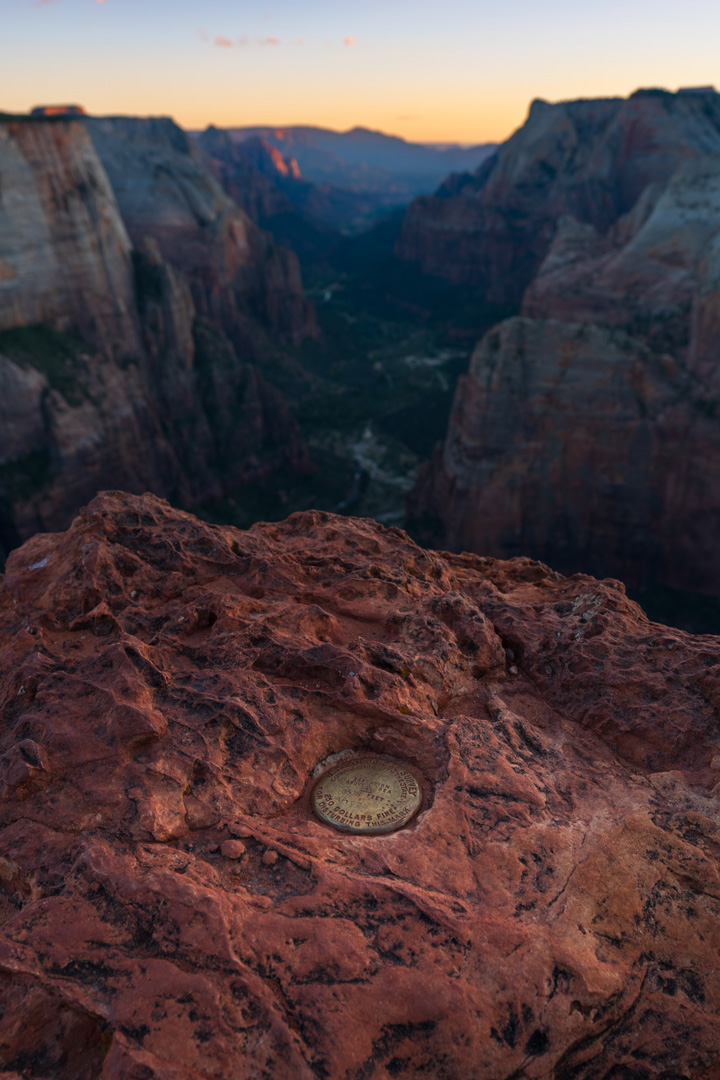
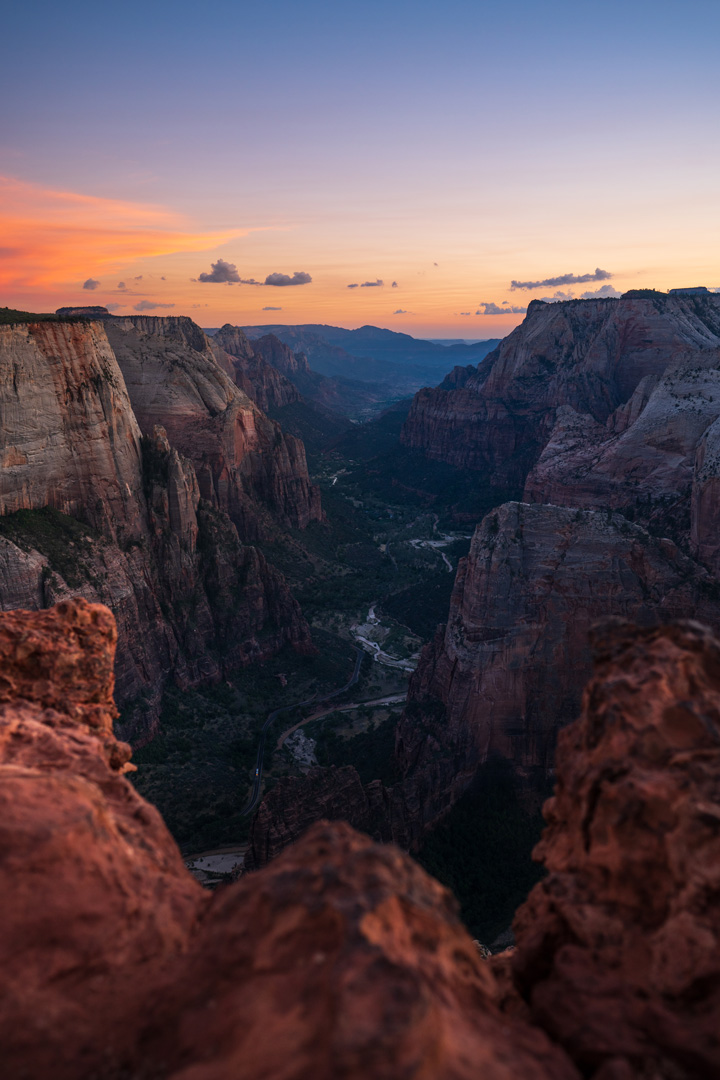
Golden Hour at Observation Point
Sunset from Observation Point is everything you hope it will be, and then some.
As I pushed toward the summit to catch the final light, I passed a few hikers on their way down who encouraged me to keep going. That small bit of encouragement gave me just enough urgency to pick up the pace.
By the time I reached the viewpoint, the sun was already dropping toward the horizon.
As it dipped lower, the canyon began to transform. The harsh midday tones softened into warm reds and deep oranges, while long shadows stretched across the landscape, adding depth and contrast to every ridge and canyon wall. The sun set beyond Cathedral Mountain, and its final light brushed the tips of the peaks below. The entire southeastern valley seemed to glow.
What struck me most was not just the light, but the solitude. Within minutes, the viewpoint had emptied, and I found myself standing there alone, taking it all in without distraction.
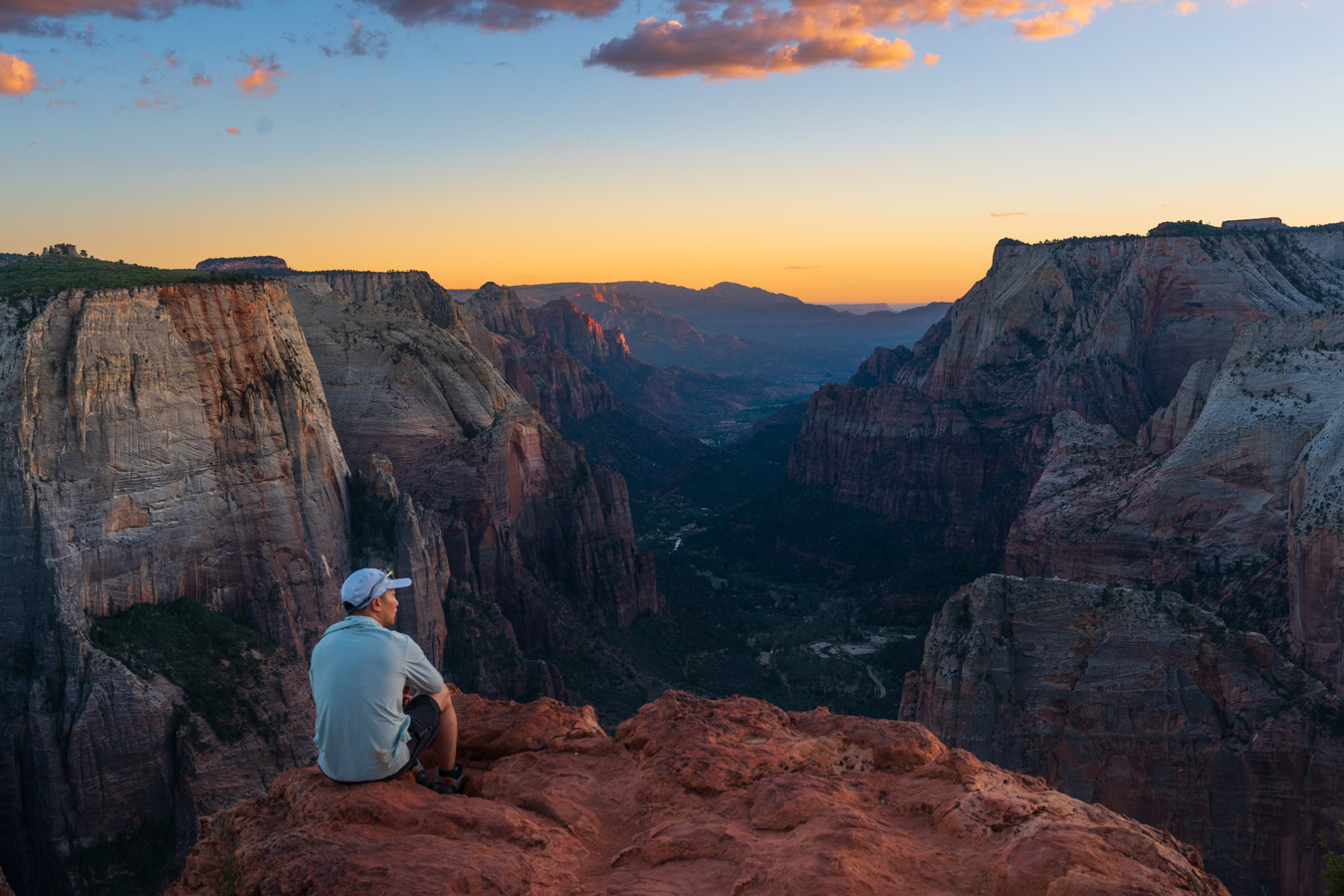
From a photography perspective, Observation Point in Zion National Park is incredible. The elevation creates natural layers in every direction, with foreground cliffs, midground canyon walls, and distant peaks stacking together in a way that feels almost effortless to compose. The view is wide open, revealing everything from Angels Landing to the Sentinel in one sweeping scene.
But as stunning as the sunset was, I knew it was only the beginning of what I had come to experience.
Staying After Dark: When the Crowds Disappear
As the sun slipped below the horizon, something began to change.
The energy of the place shifted. The steady rhythm of crickets. The soft movement of bats overhead as they moved through the evening air. A light breeze brushing across the canyon and over the rim.
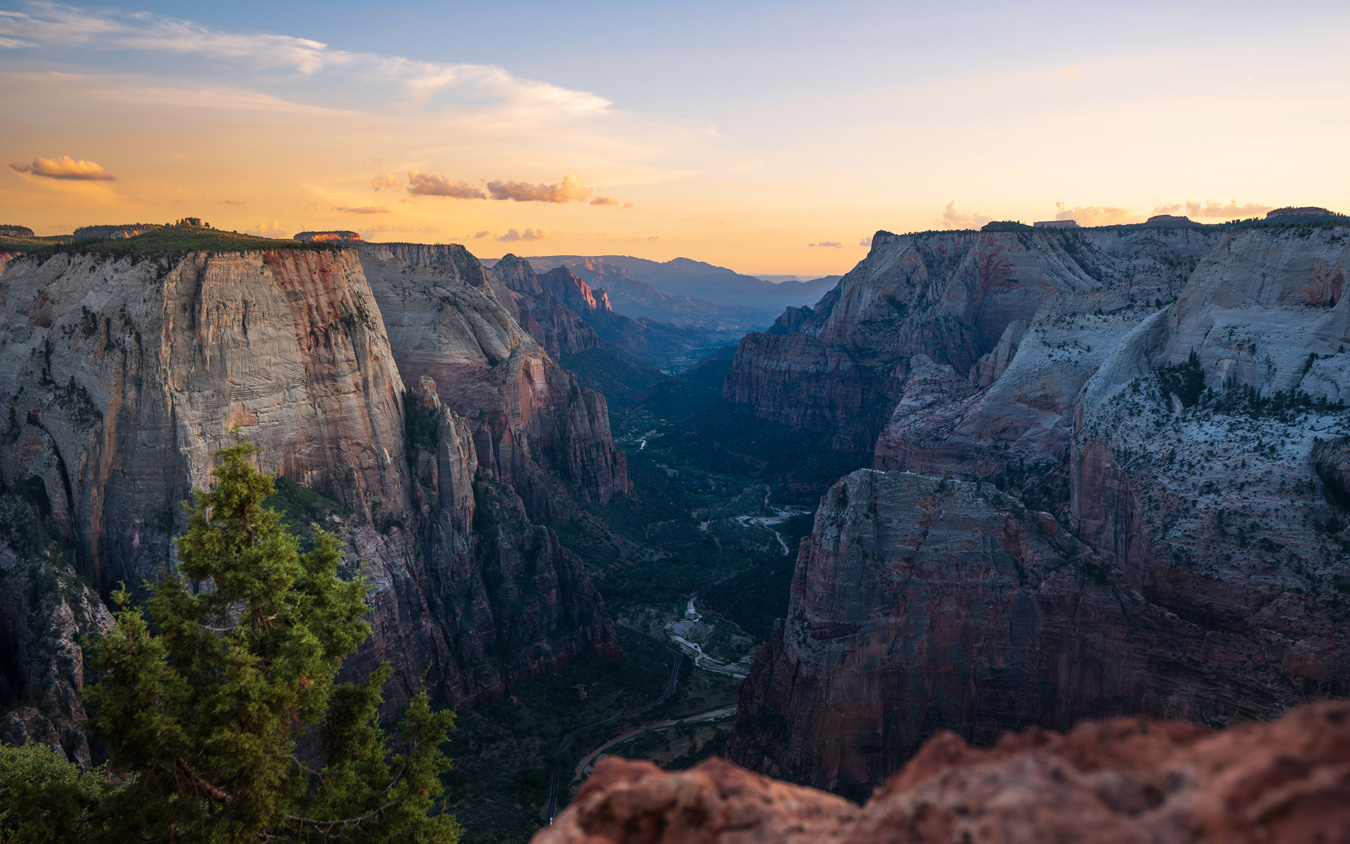
It is a very distinct feeling, realizing you are about to be alone in a place like this after dark.
There is a balance between peace and unease. The landscape that felt familiar in daylight begins to feel different, almost like you are seeing another side of it entirely. The scale feels larger. The silence feels deeper.
More than anything, I felt a sense of gratitude. Not everyone gets to experience Zion like this, in that quiet transition between day and night.
So I stayed.
Moonlight Over Zion Canyon
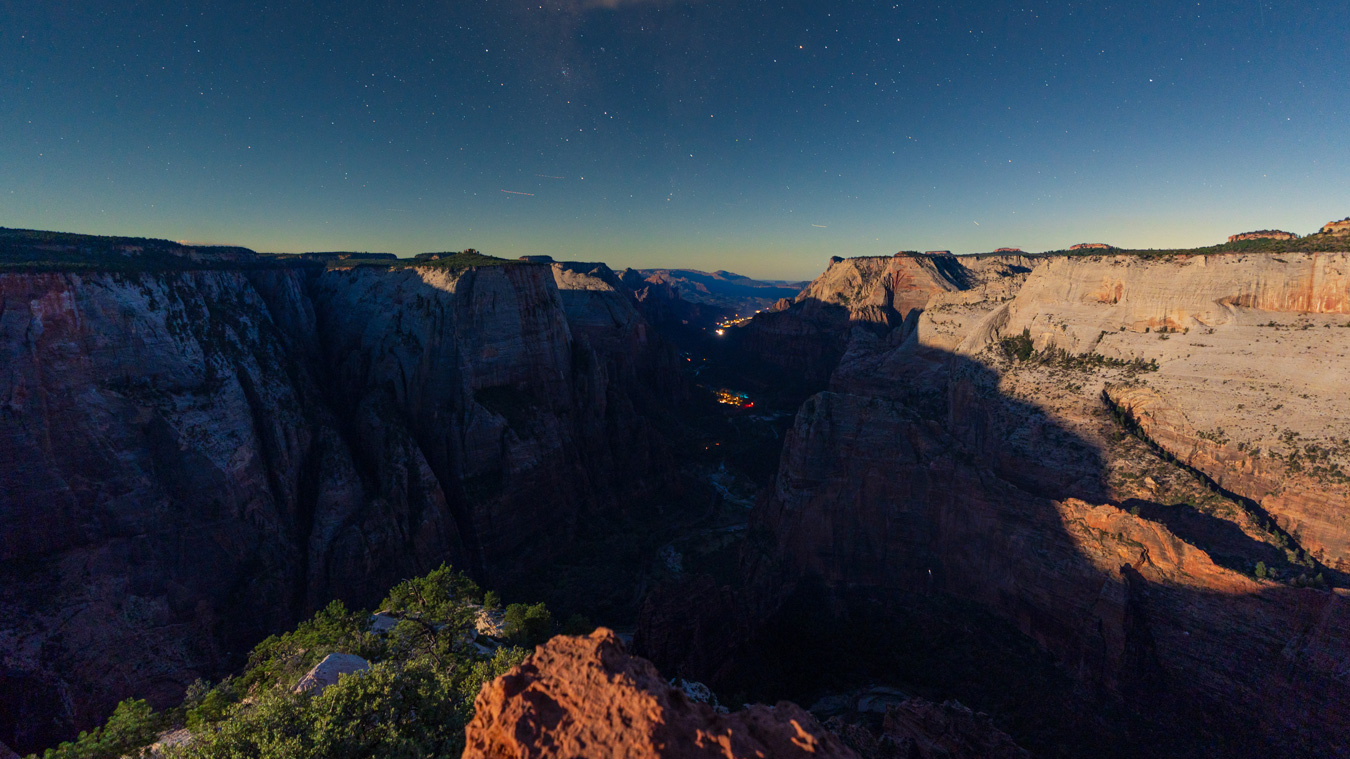
The last traces of sunset faded, and the canyon fell into darkness. For a brief moment, everything felt flat, like the detail and depth had been swallowed by the night. The stars became visible in the night sky. The comings and goings of car lights travelling between Zion Lodge. And even the milky way core made its presence known. But then a faint glow appears in the air.
At first, it was subtle. Slowly, the moon began to rise.
And with it, the canyon came back to life.
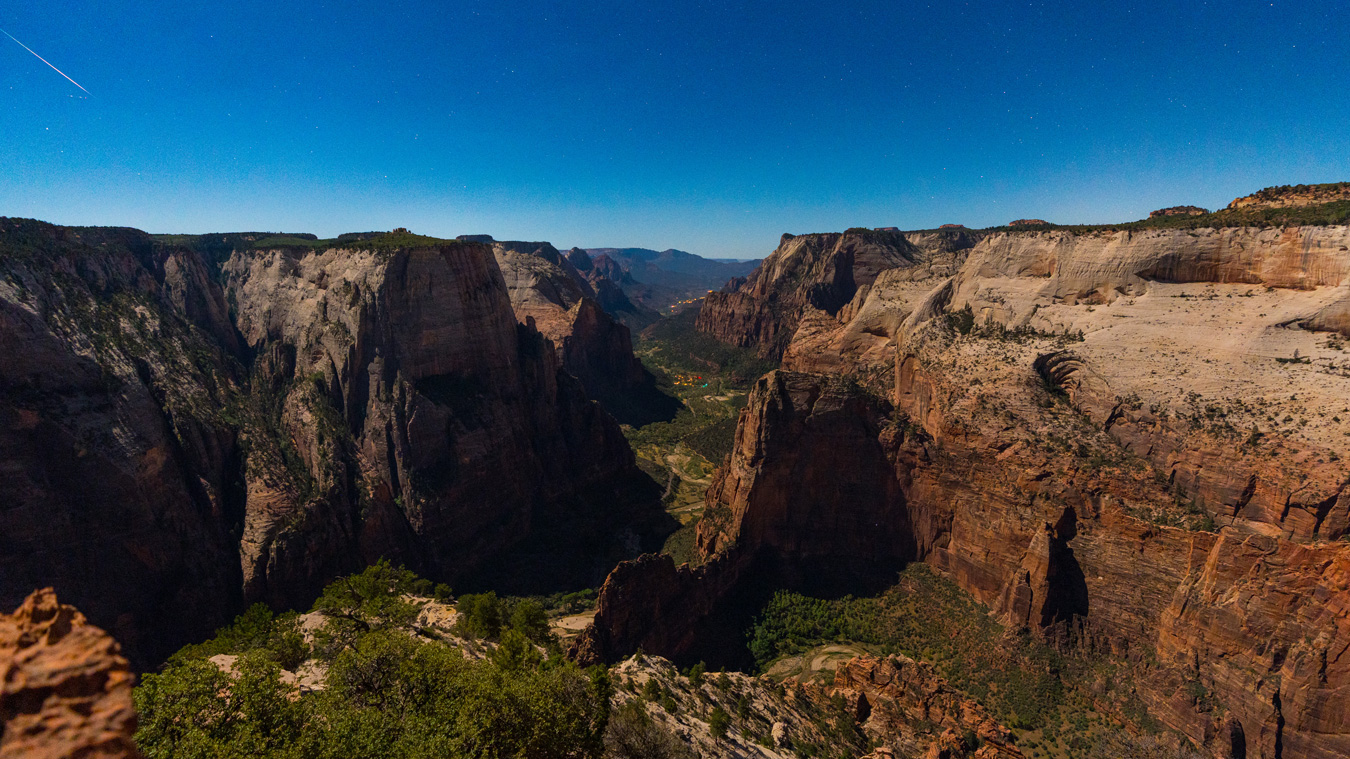
It wasn’t the same as daylight. It wasn’t even close. The light was softer, almost ethereal, casting a cool glow across the sandstone walls. Shadows stretched deeper, more dramatic, and the entire landscape took on a completely different mood.
The canyon didn’t just reappear, it transformed.
Where sunset had painted Zion in warmth and color, the moonlight revealed texture, contrast, and scale in a way I hadn’t expected. The cliffs felt taller. The voids between them darker. The silence deeper.
From a photography perspective, it was both challenging and incredibly rewarding. Longer exposures were necessary, and even the slightest movement could ruin a shot. But every frame felt worth it.
From a human perspective, it was something else entirely.
Standing there alone, high above Zion Canyon, watching the landscape glow under nothing but moonlight. It’s one of those moments that stays with you.
Photographing Zion at Night: The Moonlit Canyon
Photographing Zion under moonlight is a completely different challenge compared to shooting at sunset.
The dynamic range is extreme, with bright moonlit highlights and deep shadows that can easily lose detail. I found myself experimenting with longer exposures, carefully balancing shutter speed and ISO to preserve as much of the scene as possible.
A sturdy tripod is absolutely essential here, especially with longer exposures. Even the slightest wind can introduce motion blur if you’re not careful.
Hiking Back in the Dark: What to Know
The hike back down from Observation Point in the dark is an experience in itself.
A reliable headlamp is essential, and bringing a backup light source is always a smart decision. The trail is relatively easy to follow, but depth perception changes at night, which can make even familiar terrain feel unfamiliar. After a full hike, sunset, and time spent photographing in low light, the descent requires patience and focus.
While encounters are extremely rare, it is worth remembering that wildlife such as mountain lions do inhabit these remote areas. It is unlikely you will ever see one, but being aware of your surroundings is always important. I will admit, at all of five foot six, I tend to stay a bit more alert on hikes like this, especially when moving through quiet terrain after dark.
That said, there is something incredibly peaceful about hiking beneath the night sky. After experiencing the canyon in both sunlight and moonlight, the quiet walk back felt like a perfect way to reflect on everything I had just witnessed.
Reflections: Why This Night in Zion Stuck With Me
Some experiences in the outdoors are beautiful. Others are memorable. And then there are the rare moments that feel almost surreal.
This was one of those.
Staying past sunset at Observation Point changed the entire experience. It turned a popular hike into something personal, quiet, and deeply immersive.
It’s a reminder that sometimes the best moments in nature happen when you’re willing to stay just a little bit longer than everyone else.
Watch the Cinematic Experience
I captured this entire experience from the climb to sunset, and the moment the moonlight filled Zion Canyon in a cinematic vlog.
If you want to truly see how this night unfolded, you can watch the full video below.
A moonlit landscape like this? It stays with you.
If this story resonated with you, I’d love to have you join me on future adventures. Follow along on Instagram, and YouTube for more cinematic storytelling from some of the most beautiful places on Earth. Thanks for being here. See you out there.